
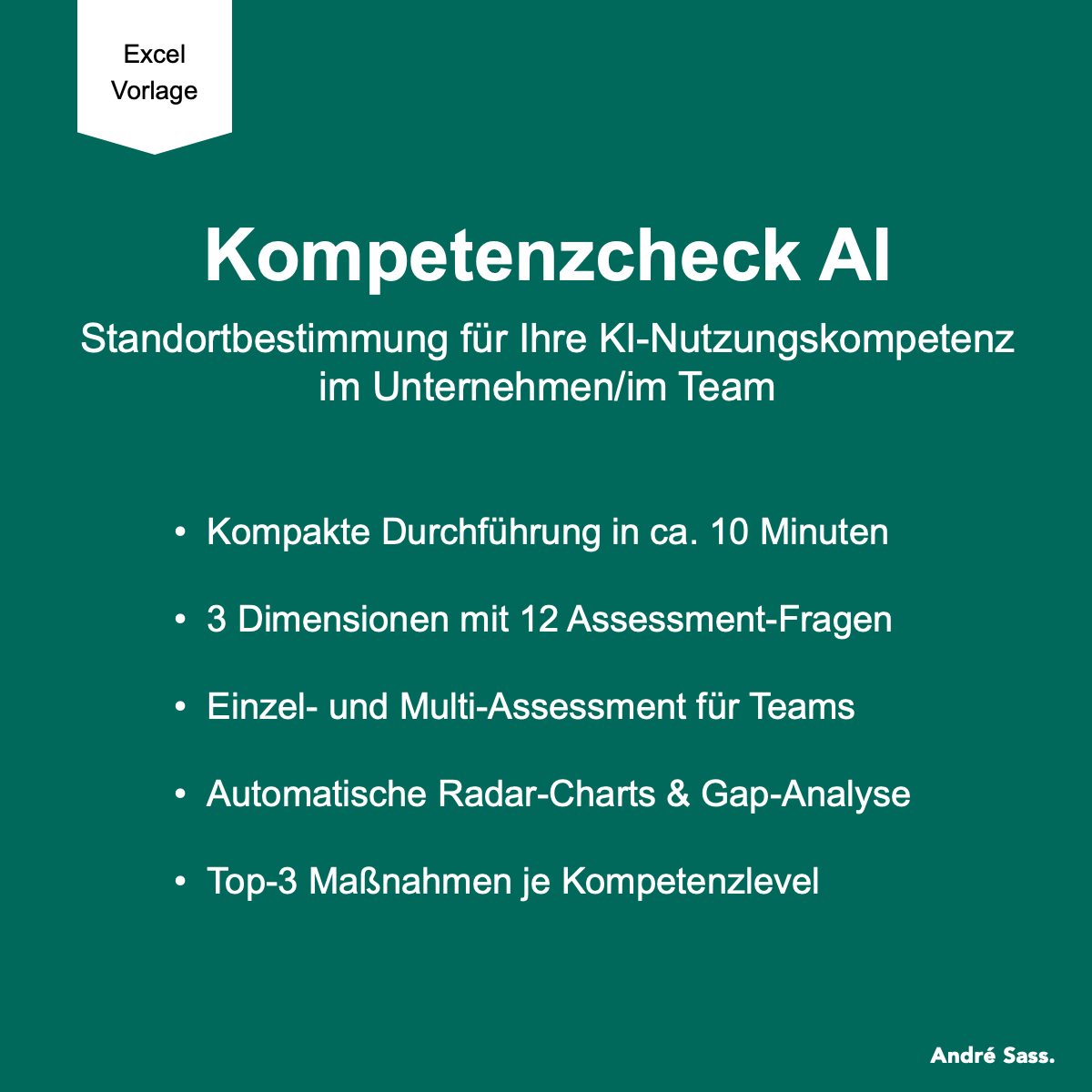
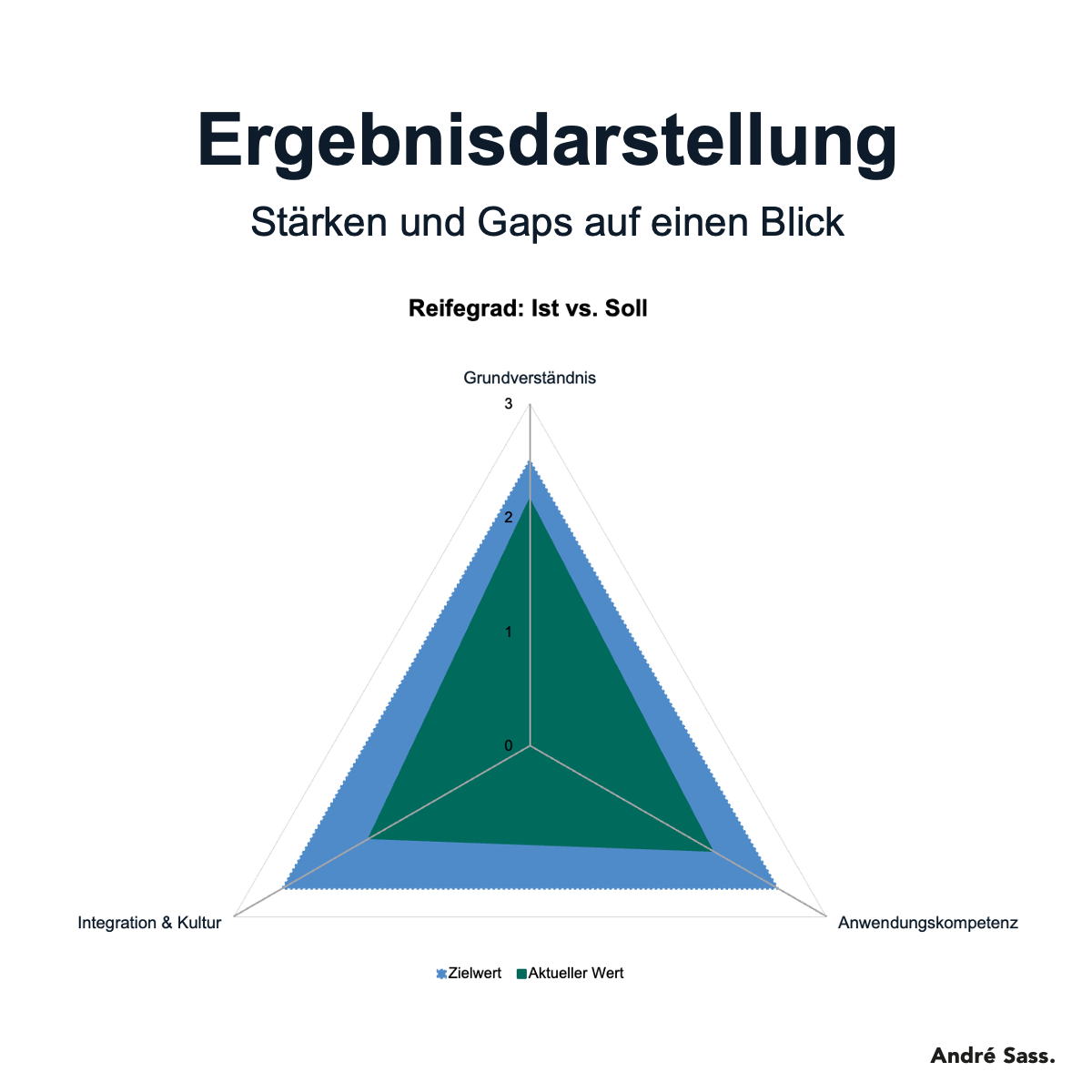
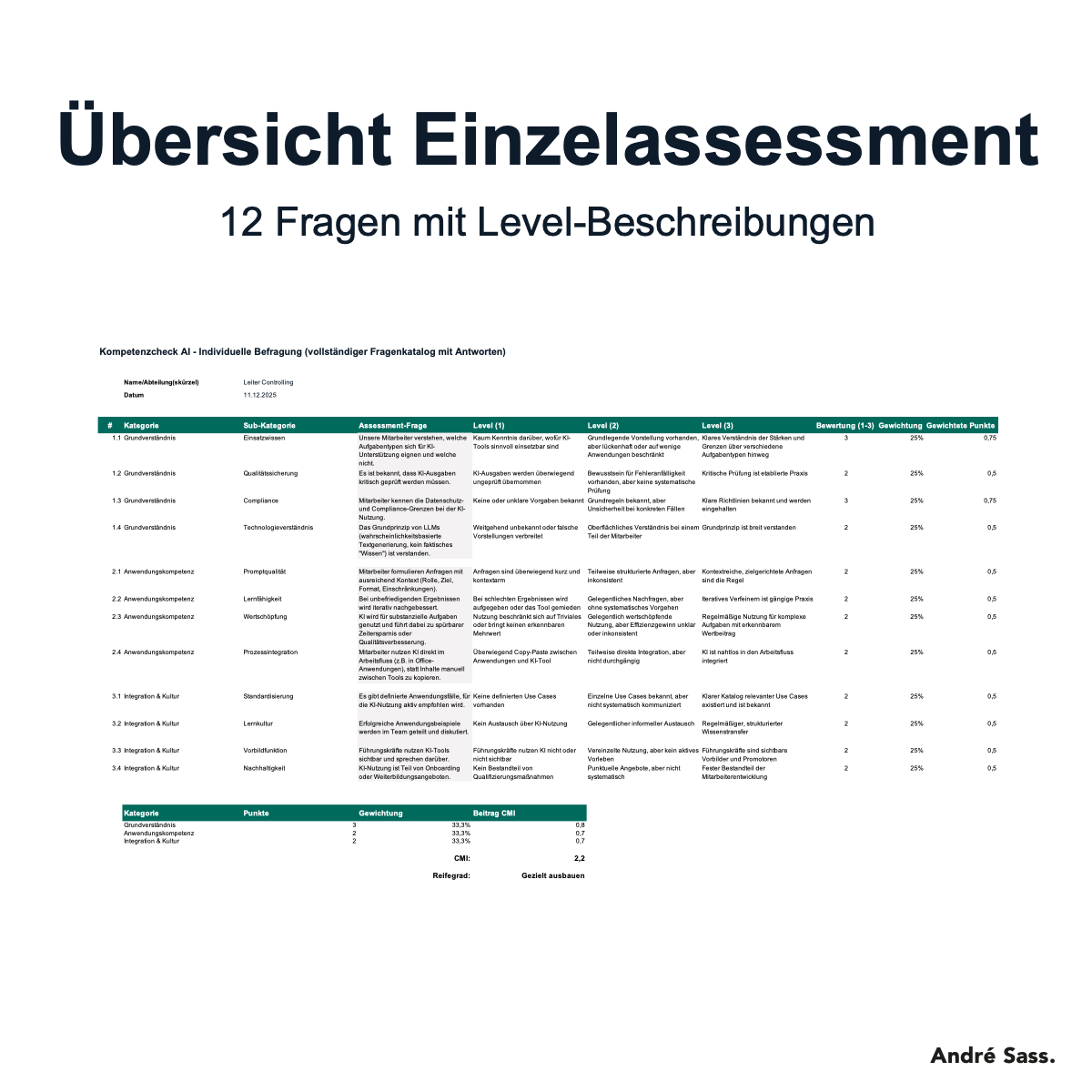
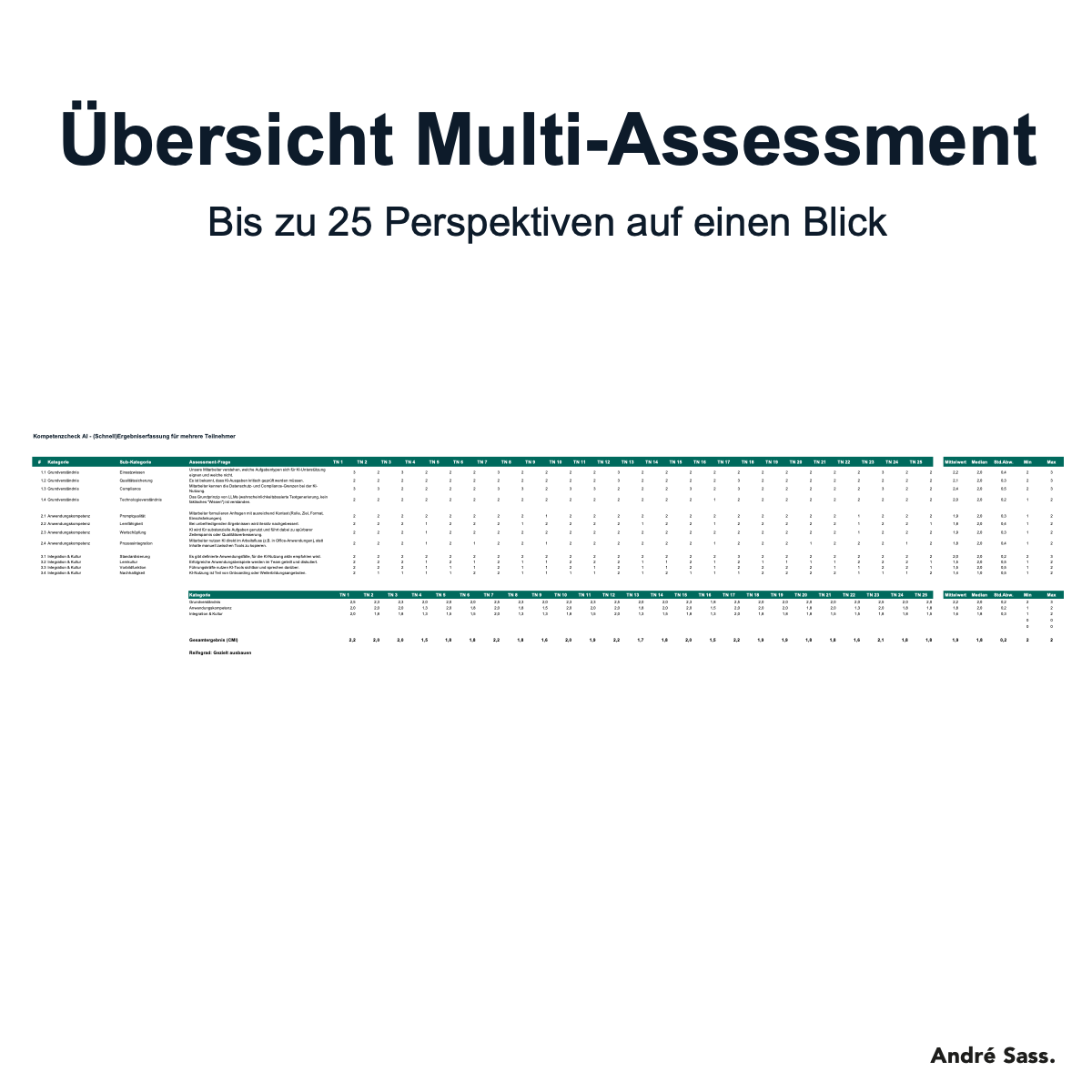
Structured self-assessment of AI competency within the organization. Three dimensions, twelve assessment questions, automatic visualization. With individual and multi-assessment for teams up to twenty-five people. Excel tool for immediate deployment.
119,00 €
incl. 19% VAT
The licenses have been procured. Microsoft Copilot, ChatGPT Enterprise, or comparable tools are available to a large portion of the workforce. The budget is substantial, expectations for productivity gains have been articulated. The question that will be asked at the latest in the next personnel committee or quarterly review: Who is actually using the tools, and with what level of competency?
Experience shows a heterogeneous picture. A small group is already working with high productivity, understands data protection and quality assurance, and has integrated AI into their work routines. A second group uses the tools occasionally without exploiting their potential. A third group largely avoids them, whether due to uncertainty, skepticism, or lack of training. Three groups, one license cost center.
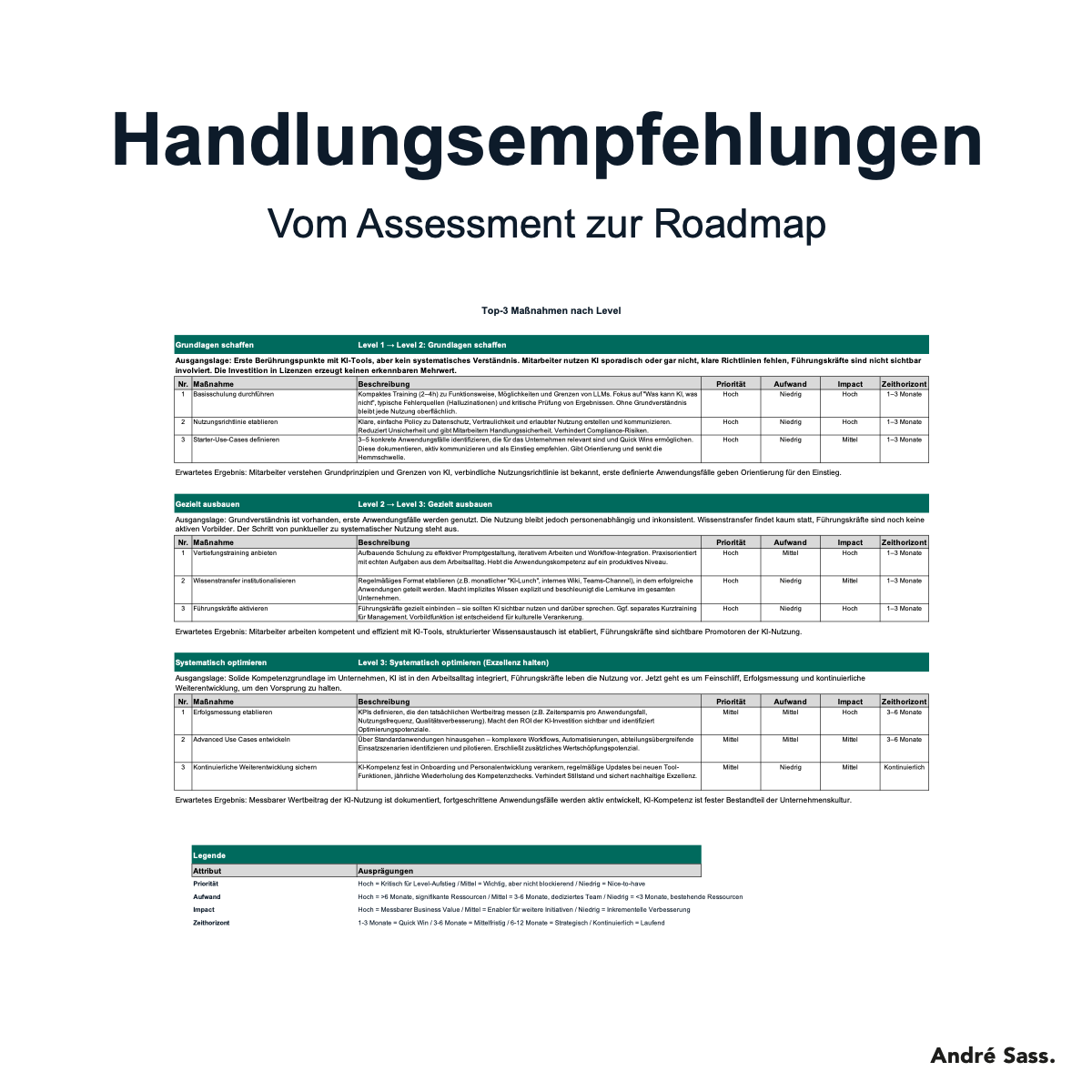
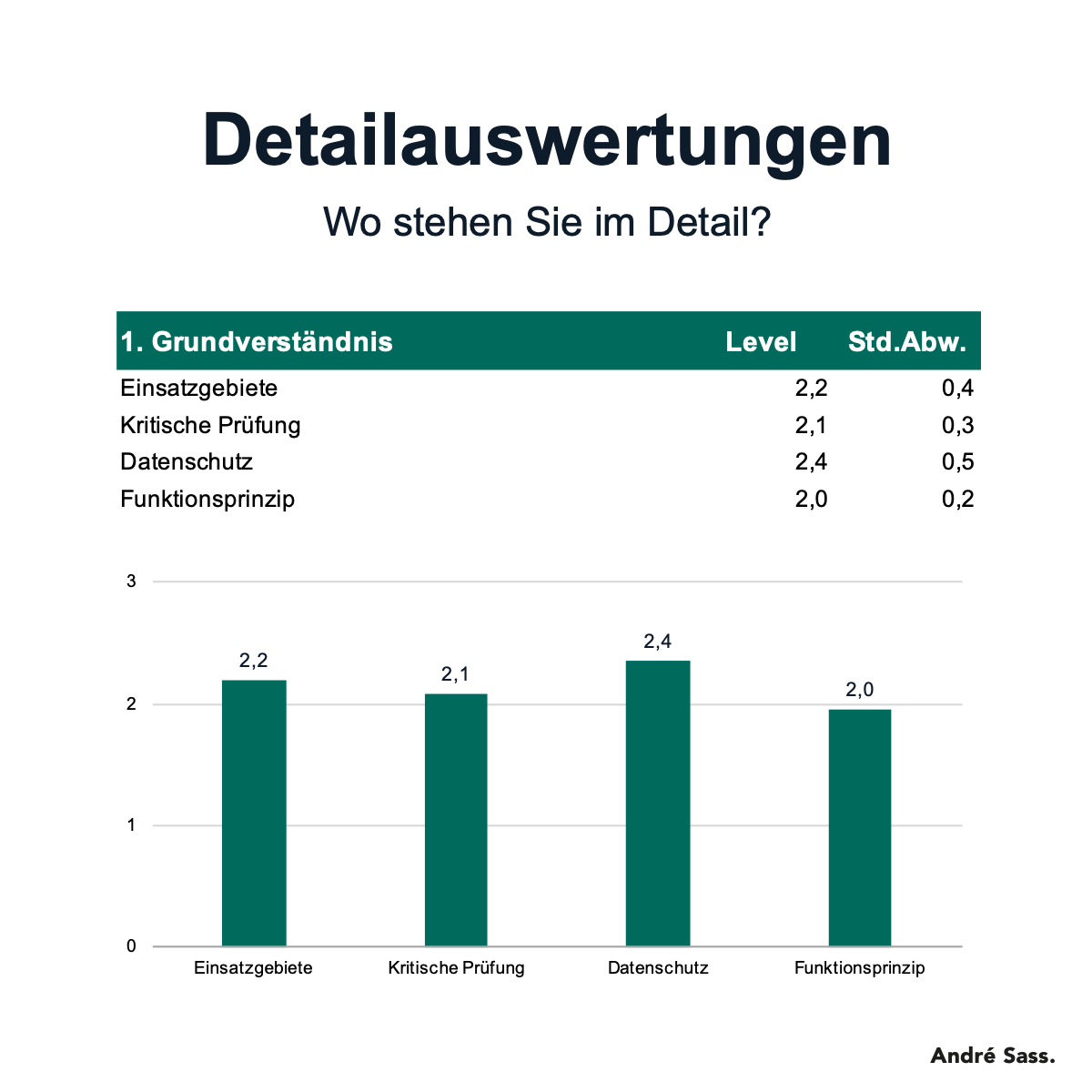
This competence check creates the foundation for a well-founded answer. Structured across three dimensions and twelve questions, with concrete level descriptions instead of pure self-assessments. It provides the data foundation for targeted training measures, instead of blanket training offerings whose impact cannot be demonstrated later.
The competence check is aimed at those responsible in one of the following situations:
An immediately deployable Excel tool for independent application. Without platform dependency, without data migration, without external advisory.
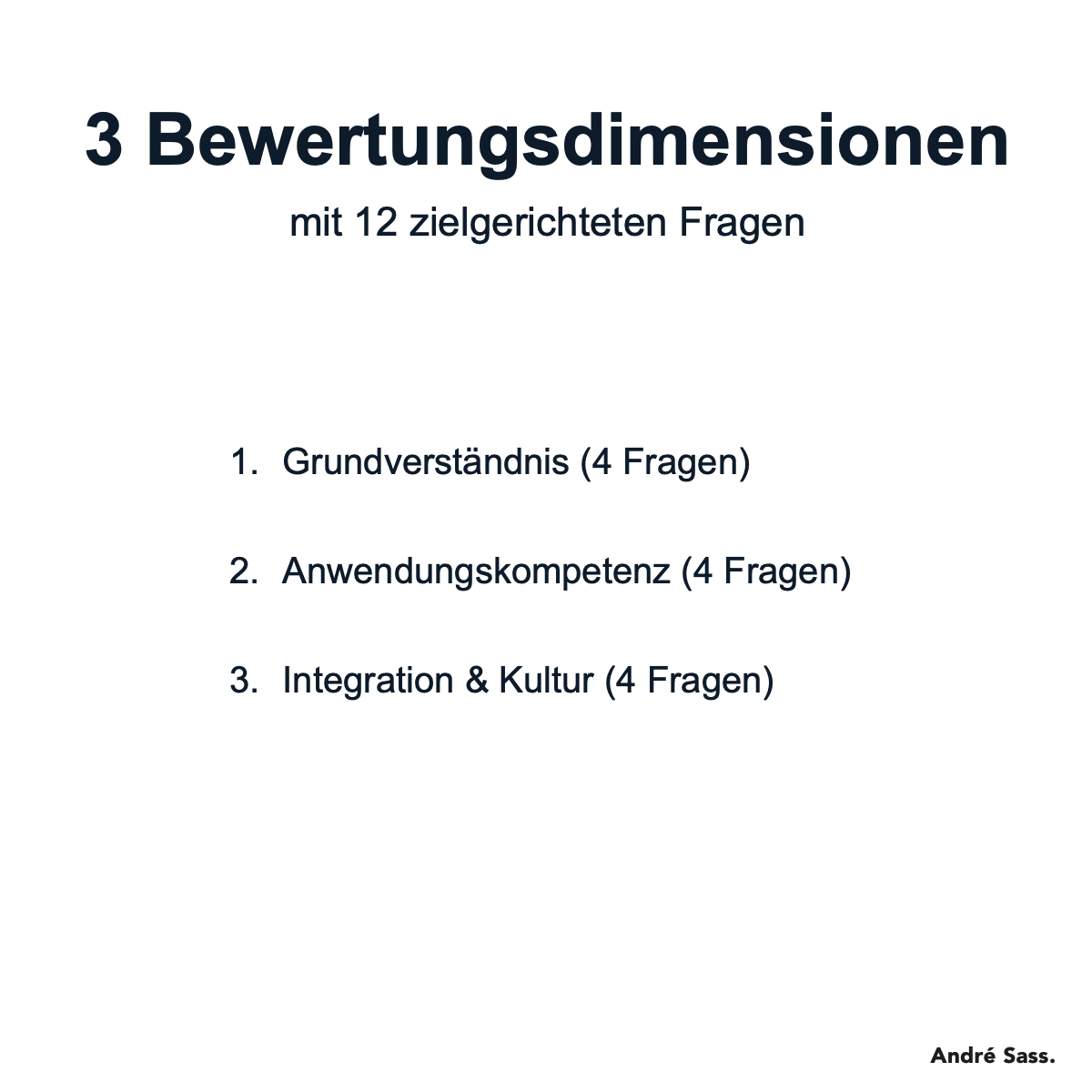
AI competency is more than mastering individual tools. It encompasses fundamental understanding of the technology, the ability for productive application, and organizational anchoring in daily work. The model weights the three dimensions equally:
The competence check has been calibrated for the current AI tool landscape: Microsoft Copilot, ChatGPT Enterprise, Claude, and comparable applications. With particular focus on practical usage competency, data protection awareness in handling corporate data, and sustainable integration into daily work.
This competence check is one of several models developed over more than twenty-five years of management advisory. The methodology is project-proven, evolved across multiple engagements, and continuously refined. It works across industries and independent of company size.
Should the analysis reveal that professional support would be beneficial: Personal advisory on AI implementation and competency development is available. An initial consultation is non-binding and clarifies whether collaboration would be productive.
In-depth coverage of the topics addressed here can be found in the following articles:
All articles can be found in the Insights overview, additional tools for independent application in the Solutions overview.
To provide you with an optimal website experience, we use cookies and similar technologies. Some of these are necessary for the operation of the site, others help us to compile anonymized usage statistics.
If you click "Accept", you consent to the use of all cookies. Under "Settings", you can make a detailed selection.